Linton Kwesi Johnson
On Britain, Brixton and W. E. B. Dubois
Interview by Andrew Tucker Leavis
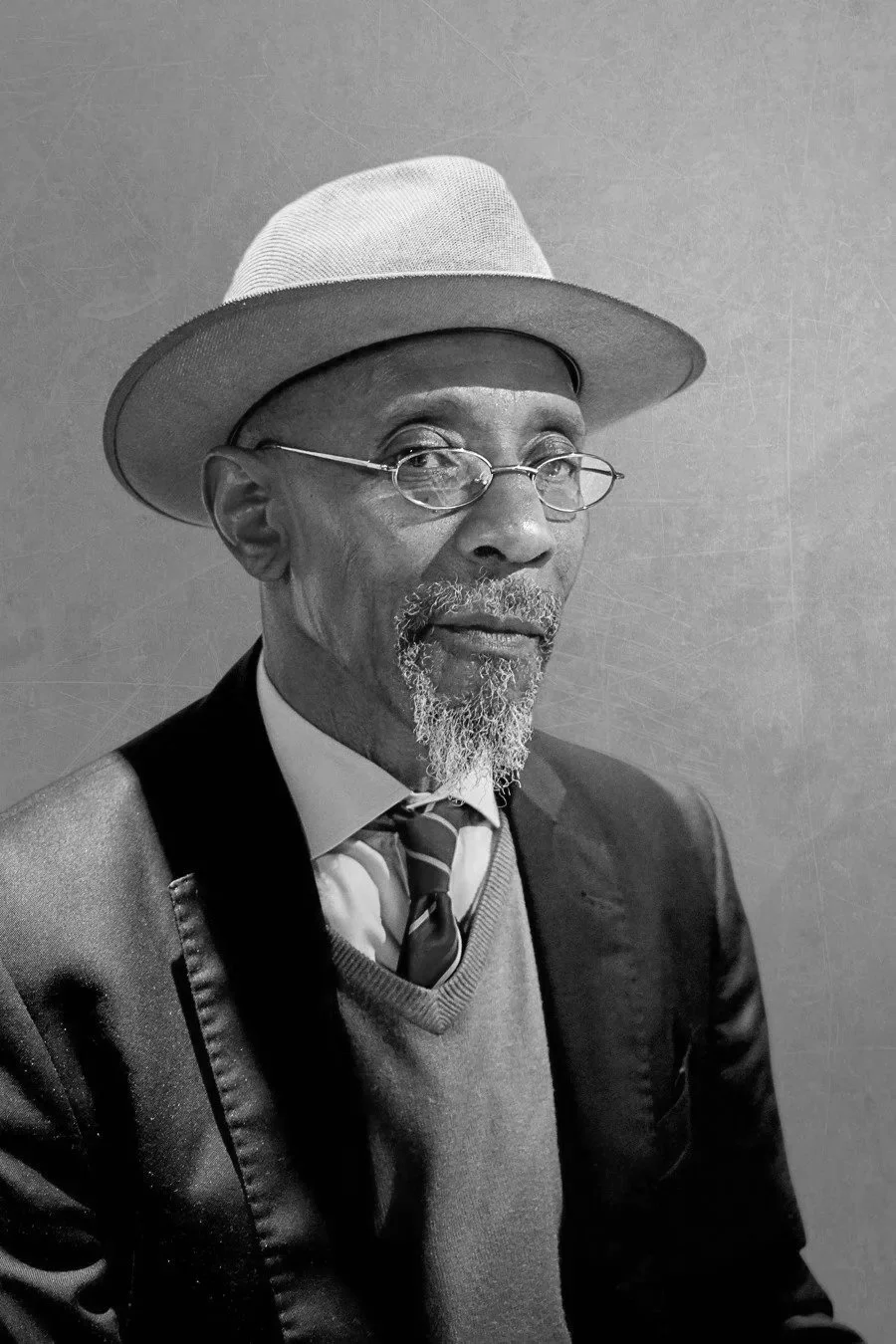
Photo by Lux Gagos
Pioneer of dub poetry, NME journalist, trailblazing activist, father and grandfather, the first black poet published by Penguin Modern Classics - Linton Kwesi Johnson has worn all these hats and more. But which will he wear today?
Once upon a time you wanted to become an accountant. Some might say you've tried to hold people to account instead. Did politics push you towards poetry?
I discovered literature when I was a young Black Panther, books that I could see myself in, about my culture and my history and so on. That made a huge difference, but I've always loved language. What brought me to poetry is one book in particular: The Souls of Black Folk, by W. E. B. DuBois, a very moving account of the lives of African Americans in the Reconstruction period after slavery. It is beautifully written - it just started something within me.
But from when I was a child, I always loved language, especially Jamaican speech, the way people talk. And just like in every other country, people use metaphors in their everyday language without perhaps realising that they’re using them: ‘he was like a raging bull in a china shop…’
That language in Jamaica - you’ve talked before about your grandma telling you Anansi stories and riddles…
Yeah, my grandmother was very important in my formation, insofar as through her I got immersed in Jamaica's folk culture, stories, old sayings. Those folk songs, a lot of them were work songs. You could hear people singing them in a village while they were planting ginger.
You moved to England in 1963 - what was that time like for you?
It was pretty challenging, because racism was rife back in those days. And we had to fight, to struggle to integrate ourselves into society. And the youth were at the forefront of that, because we young people, you know, are not going to put up with what our parents put up with! It was pretty challenging, but also exciting. We’d been getting the latest records from Jamaica, the latest Rocksteady, which kept us in touch with our roots, so to speak. And that is really important when you're in a hostile environment, where there's a colour bar, you can’t go to the pub and so on. We had to create our own thing.
You said that music - reggae, mento - felt like an umbilical cord back to Jamaica.
Exactly.
Jamaica, of course, having been built on slavery - you wrote that the legacy of slavery was ‘like a naked light in a house full of dynamite’. Is it still true, can that ever be defused?
We've made tremendous progress since we've been here. And my grandchildren don't have to fight the same battles that I had to fight, because we fought those battles, which were basically breaking down the barriers to us becoming part of British society - we've done that.
But of course the struggle to eradicate racism is ongoing. As they say in Angola, ‘a luta continua’ - the struggle continues.
Are your grandchildren fans of yours yet?
Nah, nah, nah. (Linton laughs). Kids nowadays, they’re not interested in what grandad did.
Maybe when they’re older! Like you say, so many changes have happened since you’ve come to Britain, are you looking at the world around you now and feeling more optimistic?
Yes, I am. Life is about change. We have to strive for change, to make the world a better place. And it's great to be young at this time, because of the revolution in technology, the new digital world and the immense changes that have happened over the last two decades or so - all of that is tremendous, you know, and I believe in the capacity of the human spirit to triumph over evil. That is the basis of my hope.
My grandchildren don't have to fight the same battles that I had to fight, because we fought those battles, which were basically breaking down the barriers to us becoming part of British society - we've done that. But of course the struggle to eradicate racism is ongoing.
Cecil Day Lewis, a poet laureate, grew up here near Sherwood Forest - in 1977, you were awarded the Cecil Day Lewis fellowship. Back then, did you appreciate that institutional recognition or did you feel uneasy about it?
I was very grateful for that fellowship, because I was an aspiring young writer, I didn't even know if I had any talent or not. And to be given that was a fantastic bit of encouragement. And I think it was more the local recognition I wanted, than anything else. Because I'm a Brixton boy.
There in Brixton you’ve now become the chairman of the 198 Contemporary Arts Gallery, how did that begin?
They’re just around the corner from where I live, and I've always supported them by buying stuff. Over the years, they'd been at me for a long time to become one of the board of directors and eventually I gave in.
It's part of my commitment to my local community. It promotes excellence, especially among aspiring artists from ethnic minorities and other groups, you know, LGBT+, we try to be as inclusive as possible and to provide a platform for those people. It's something worthwhile.
How important is government funding for the arts?
I mean, taxpayers pay their taxes, they should be able to get these services. Any society that doesn't have its creative side is impoverished. It's up to the state to help nurture for the good of society in general.
But of course, local governments have been decimated by Tory cuts, for a decade or more. I think that's the main problem.
We’re always out for recommendations - who’ve you been reading lately?
I go back to the old classics - go back to people like Derek Walcot, Mervyn Morris, Kwame Dawes, who just became the new Poet Laureate of Jamaica; Jackie Kay in Scotland. I really, really like her work, she's a distinctive mixed race Scottish voice.
And here’s a hard one - the people who know you best, how might they describe you?
Oh, bloody hell, you’ve got me there mate! My Mrs. would say I’m grumpy, I think most people find me easygoing. I’m at the age now where I could be easily described as a miserable old git. But I've never heard anybody actually say that about me.
A good deal of your career has been fighting for your community… is doing that a burden or an honour?
We do what we think needs to be done. I don't see myself as making any huge sacrifice more than anybody else. I just did what I had to do.
